Maximizing Material Recovery: A Guide to Environmental & Recycling Equipment
September 1, 2026
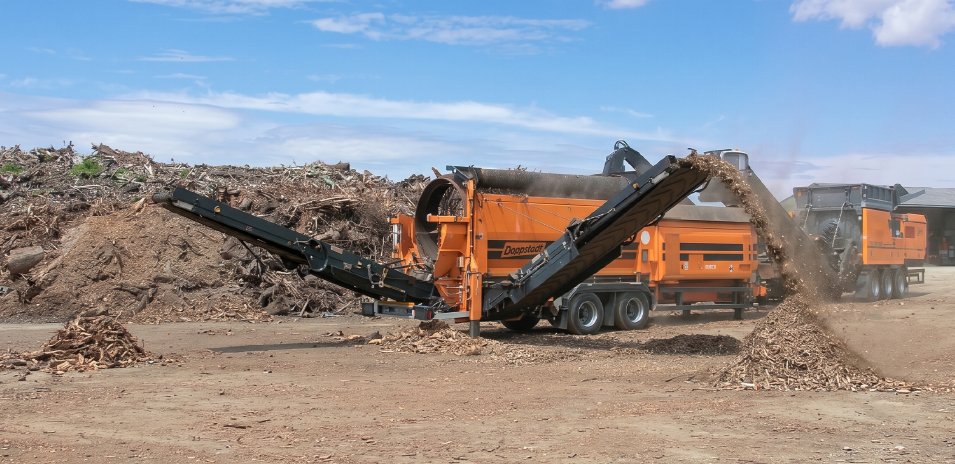
Whether you are managing construction and demolition (C&D) debris, processing green waste, or running a large-scale material recovery facility, dealing with unsorted and unprocessed waste is a massive drain on your bottom line and operational footprint.
The good news is that with the right heavy-duty processing machinery, you can turn those massive waste streams into a manageable, reusable, and highly profitable resource.
To reclaim valuable yard space and maximize throughput, you need the right tools for the job. This buyer's guide breaks down the core categories of environmental and recycling equipment you need to optimize your workflow. We will cover exactly what each machine does, how it tackles tough materials, and the real-world operational benefits for your site, so you can make an informed decision and get the best ROI on your equipment investment.
Jump to a category: Slow-Speed Shredders | High-Speed Grinders | Trommel Screens | Star Screens | Density Separators | Thermal Treatment Systems | Compost Turners | Depackaging Systems
Slow-Speed Shredders
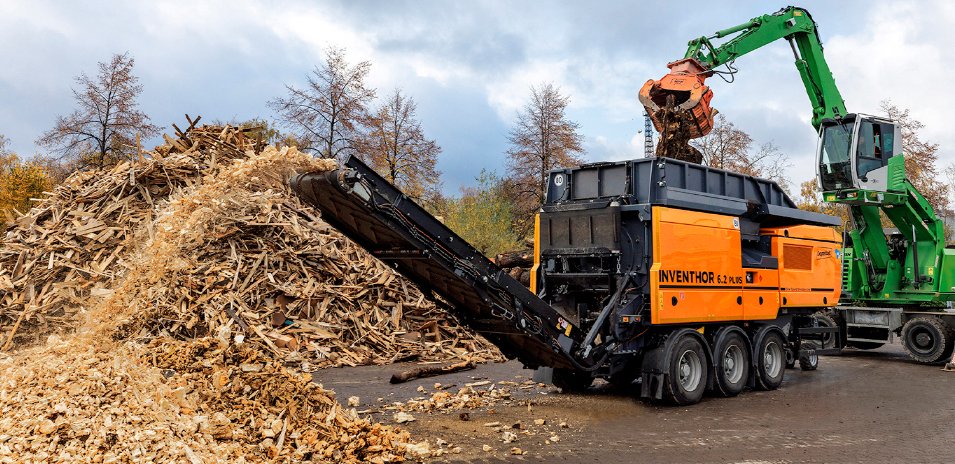
The Job: When you are staring down a massive pile of construction and demolition (C&D) debris, mixed commercial waste, or bulky root stumps, slow-speed shredders are your primary line of defense. These machines are built for primary volume reduction—taking oversized, difficult materials and breaking them down into manageable sizes for easier transport, sorting, or secondary processing.
The Mechanics: Instead of relying on high-RPM blunt force, slow-speed shredders use massive torque to aggressively tear and shear material apart. This low-speed, high-torque approach keeps dust and noise to a minimum on your site. More importantly, it handles tough contaminants like tramp metal without destroying the machine. When the shredder hits an unshreddable object, the comb automatically opens or the shaft reverses, protecting your cutting tools from catastrophic failure.
The Operator Advantage: Maximum uptime and lower wear costs. By chewing through the toughest materials without stalling or breaking teeth on hidden steel, these machines keep your yard moving. Pre-shredding bulky waste saves your downstream equipment from taking a beating, reclaims your yard footprint faster, and heavily cuts down on hauling frequency.
Our Lineup: We carry industry-leading Doppstadt slow-speed shredders to tackle any material stream. For relentless performance and maximum versatility on mixed waste, the single-shaft INVENTHOR 6.2 and INVENTHOR 9 are proven workhorses. If your site demands the aggressive, tearing power of a dual-rotor setup, we offer the Doppstadt CORE Series, featuring the CORE 250, CORE 800, and CORE 900 twin-shaft shredders.
Explore our full lineup of Slow-Speed Shredders to find the right throughput for your operation.
High-Speed Grinders
The Job: When you need to turn pre-shredded material, green waste, or wood pallets into a fine, consistent, and sellable end-product, high-speed grinders take over. While slow-speed shredders handle the heavy lifting of primary volume reduction, high-speed units are engineered for secondary processing and fine sizing, preparing materials for composting, biomass fuel generation, or landscaping mulch.
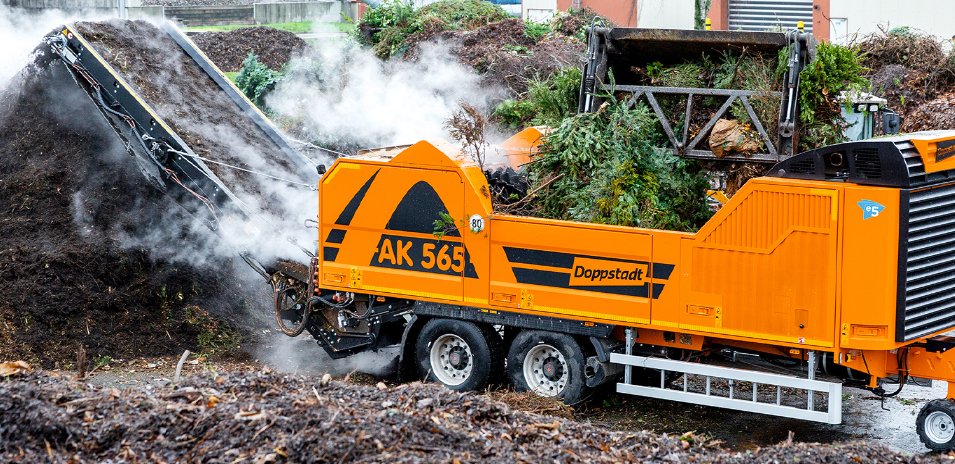
The Mechanics: Instead of low-speed shearing, these machines use a high-speed rotating drum (often exceeding 1,000 RPM) equipped with heavy-duty free-swinging flails. As material is fed into the chamber, these hammers aggressively shatter and smash the waste against a sizing screen or grinding basket. The material only exits the machine once it is small enough to pass through the specific screen size you have selected, guaranteeing a uniform output.
The Operator Advantage: Unmatched precision and output quality. High-speed grinders give you absolute control over your final material size, allowing you to quickly swap screens to meet the exact specifications of your buyers. The free-swinging flail design also protects the rotor; if an un-crushable contaminant slips through your pre-shredding phase, the flails simply swing back, preventing severe damage to the core drum.
Our Lineup: We carry the Doppstadt AK Series, known for delivering massive throughput and consistent sizing. For a highly mobile, compact footprint that still punches above its weight class, the wheeled Doppstadt AK 315 is an ideal entry point. When you need heavy-duty, mid-range production, the Doppstadt AK 565 offers exceptional versatility. For high-capacity, heavy-duty grinding in the most demanding site conditions, the tracked Doppstadt AK 640 K delivers relentless power and mobility directly to the pile.
Explore our full lineup of High-Speed Grinders to find the right throughput for your operation.
Trommel Screens
The Job: Once your material is shredded or ground, you need to classify it to create a clean, sellable end-product. Trommel screens handle the heavy-duty sorting. Whether you are separating fines from compost, sizing topsoil, or classifying wood chips and biomass, these screens ensure your final product meets strict size requirements while rejecting oversized debris.
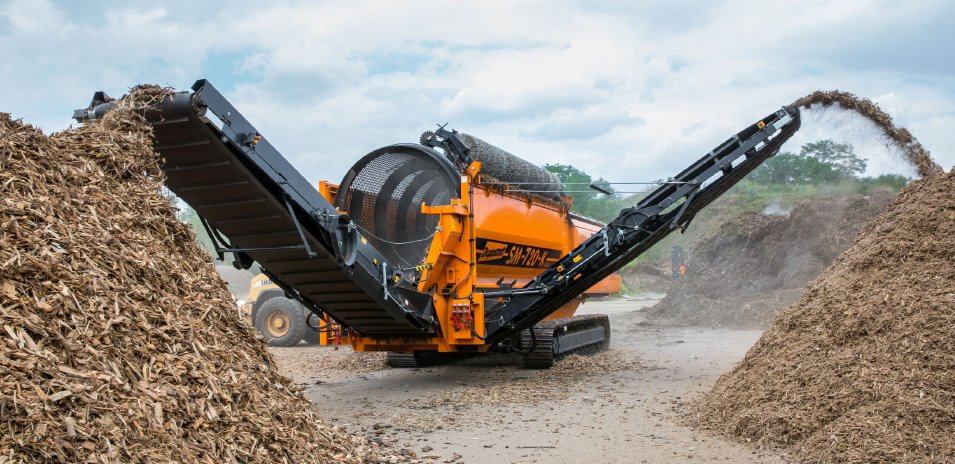
The Mechanics: Material is fed into a massive, continuously rotating cylindrical drum equipped with specific screen sizes. As the drum turns, the material tumbles. The smaller material (fines) falls through the screen mesh onto a discharge conveyor, while the larger, oversized material (the "overs") travels the length of the drum and is discharged out the back. This tumbling action is highly efficient for wet or sticky materials that would typically blind a standard flat deck vibrating screen.
The Operator Advantage: Maximum versatility and continuous throughput without clogging. Trommels excel in difficult, damp conditions, utilizing heavy-duty exterior brushes that continuously clean the drum as it spins to prevent material build-up. Additionally, the sizing drums are designed to be easily swappable. If your buyer changes their material spec, you can swap the drum to a different mesh size and get back to processing with minimal downtime.
Our Lineup: We stock the heavy-duty Doppstadt SM Series trommels, engineered for massive volume and site reliability. Our inventory features the highly mobile, wheeled Doppstadt SM 720.2 for easy site-to-site highway transport. For operators who need to track the machine across rough terrain or deep into the yard right next to the working pile, we offer the robust, tracked Doppstadt SM 720.2 K.
Explore our full lineup of Trommel Screens to find the right sorting solution for your site.
Star Screens
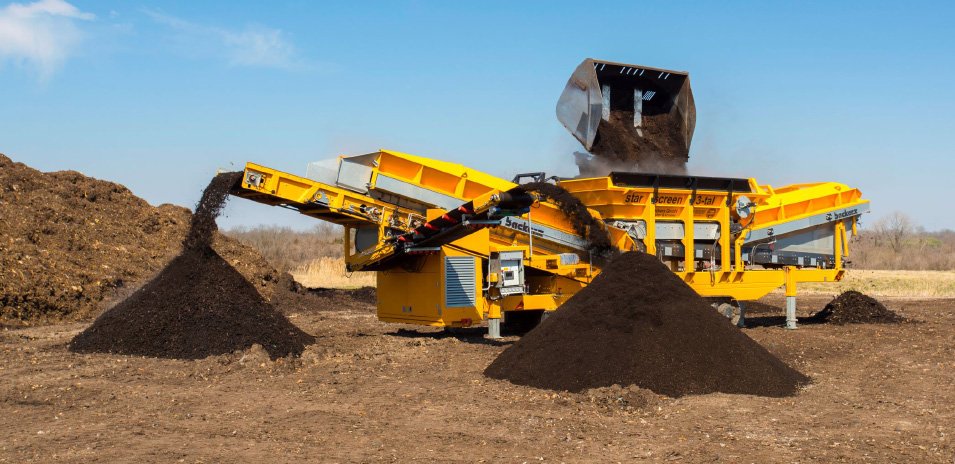
The Job: When you are dealing with heavily organic, wet, or sticky materials like compost, topsoil, bark, and biomass, standard screens can quickly blind over and choke your production. Star screens are purpose-built for these difficult, cohesive materials, offering massive screening throughput on a highly compact footprint. They are often used when you need precise separation at higher capacities than a trommel can provide.
The Mechanics: Instead of a tumbling drum, star screens use a large deck made up of multiple rapidly rotating shafts fitted with star-shaped polyurethane or steel discs. As material is fed onto the deck, the spinning stars aggressively flip, aerate, and propel the waste forward. The smaller fines fall through the gaps between the stars, while the oversized material "floats" across the top of the rotating deck to the discharge point. The size of the screened material is determined by the spacing of the stars and the rotational speed of the shafts.
The Operator Advantage: Unstoppable throughput in wet conditions. The continuous aggressive rotation of the stars makes the screen deck virtually self-cleaning, preventing sticky materials from clogging the gaps. Additionally, operators can easily adjust the rotational speed of the star shafts on the fly from the control panel, allowing you to instantly fine-tune your material sizing without having to physically swap out a drum or screen mesh.
Our Lineup: We carry Backers star screens for reliable, high-capacity material separation. The Backers 2-Fraction models efficiently separate oversize and fine grain (5mm to 80mm) with easily serviceable, centrally arranged components. For complex sorting of C&D waste, compost, or biomass, the Backers 3-Fraction uses a dual-deck system, hitting a coarse screen first to loosen material and reduce wear. Both configurations can equip heavy-duty bar grates or wind sifting devices.
Explore our full lineup of Star Screens to find the right sorting solution for your site.
Density Separators
The Job: When processing compost, mulch, or biomass, your final product is only as valuable as it is clean. If your screened overs are heavily contaminated with plastics, paper, rocks, and glass, you can't reintroduce them into your composting cycle. Density separators allow you to extract these inorganics, recovering valuable organic material and preventing costly tipping fees for contaminated piles.
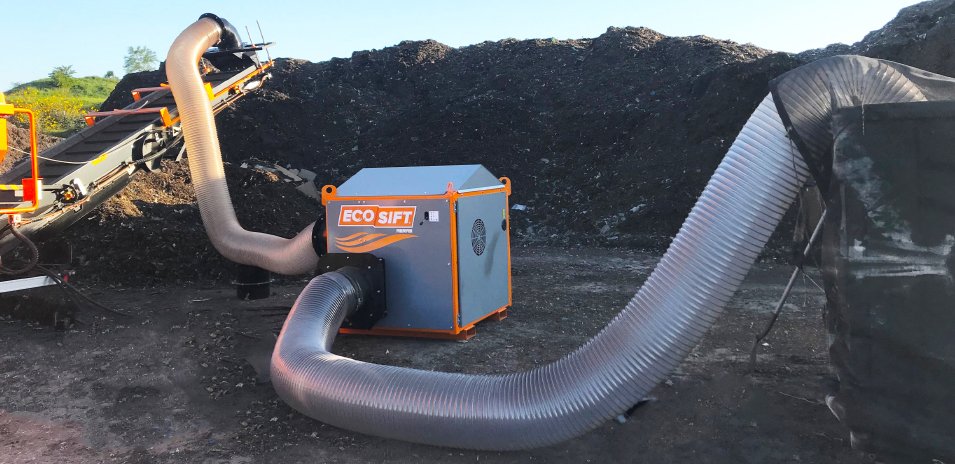
The Mechanics: Instead of screening by size, these machines separate material by weight. As material moves through the system, it enters an expansion chamber where an air drum and powerful air knives blow the lighter fractions (like plastics and foils) toward a series of suction fans. Meanwhile, a destoning belt quickly removes the heavy fractions, such as rock and metal, leaving you with a clean, mid-sized organic fraction.
The Operator Advantage: By decontaminating your overs inline during the screening process, you instantly maximize revenue and increase profits. Reintroducing dirty overs will eventually destroy your composting process. Density separation stops the continuous buildup of plastics in your cycle, allowing you to turn a waste stream into a 95% clean, usable product in a single pass without expensive manual sorting.
Our Lineup: We offer the EcoSift AERAS Windsifter for effortless, cost-effective density separation. Designed to fit on any conveyor from 32 to 48 inches wide, this hydraulically or electrically powered unit attaches directly to the overs discharge belt of your existing trommel or star screen. It delivers targeted, single-pass removal of light fractions, ensuring your final product is clean and ready for the market.
Explore our full lineup of Density Separators to find the right sorting solution for your site.
Thermal Treatment Systems
The Job: When you need to drastically reduce wood waste volume and eliminate exorbitant landfill tipping fees, thermal treatment systems offer a highly profitable alternative. Instead of paying to haul away land clearing debris, forestry waste, or clean demolition wood, these systems allow you to charge customers to accept their waste while transforming it into biochar, a highly valuable, carbon-rich soil amendment.
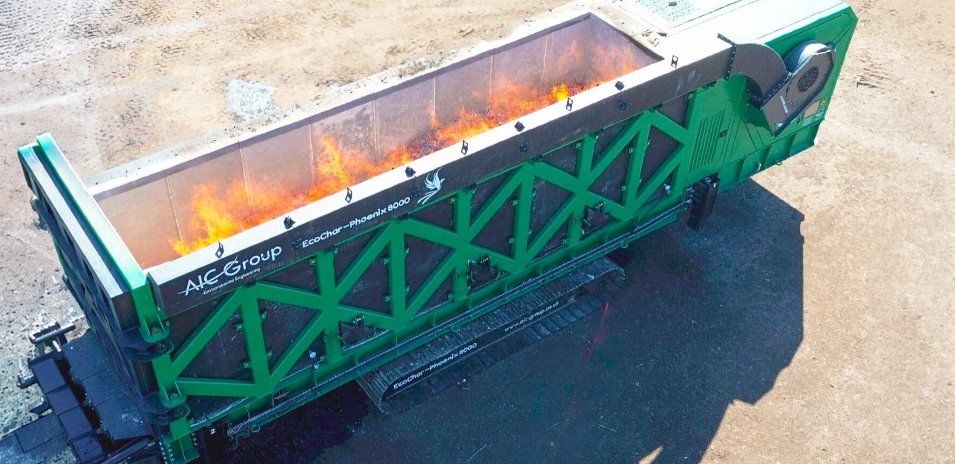
The Mechanics: Utilizing a process called pyrolysis, these machines superheat organic waste in a low-oxygen environment. Material is fed directly into a self-contained chamber equipped with refractory concrete panels and a door rated to withstand temperatures up to 3,000° F. An Intelligent Combustion Management System automatically controls the entire burn, meaning no pre-grinding or shredding is required. The resulting biochar is then cooled by a variable water quench system and safely discharged via an auger and stainless-steel mesh conveyor.
The Operator Advantage: Massive volume reduction and lowered transportation costs. You can reduce your wood waste volume by up to 90% while processing up to 12 tons of dry, clean wood per hour. This massive throughput frees up valuable yard space and creates a circular economy solution for your site. Plus, with an integrated 8-megapixel network camera, operators can remotely log in to safely monitor the combustion process.
Our Lineup: We carry the EcoChar Phoenix 8000 for heavy-duty, highly mobile biochar production. Built on a 2-speed steel tracked chassis, it features a diesel/electric hybrid power system driven by a certified EPA Tier 5 Final engine, allowing you to track the machine deep into the yard or out on remote land-clearing sites.
Explore our full lineup of Thermal Treatment Systems to turn your renewable waste materials into revenue.
Compost Turners
The Job: To produce high-quality compost quickly, your windrows need precise oxygenation, temperature control, and consistent mixing. Compost turners are purpose-built to accelerate the decomposition process. By properly managing the biological activity within the pile, these machines prevent anaerobic conditions, eliminate foul odors, and turn raw organic waste into a valuable, nutrient-rich soil amendment in a fraction of the time.
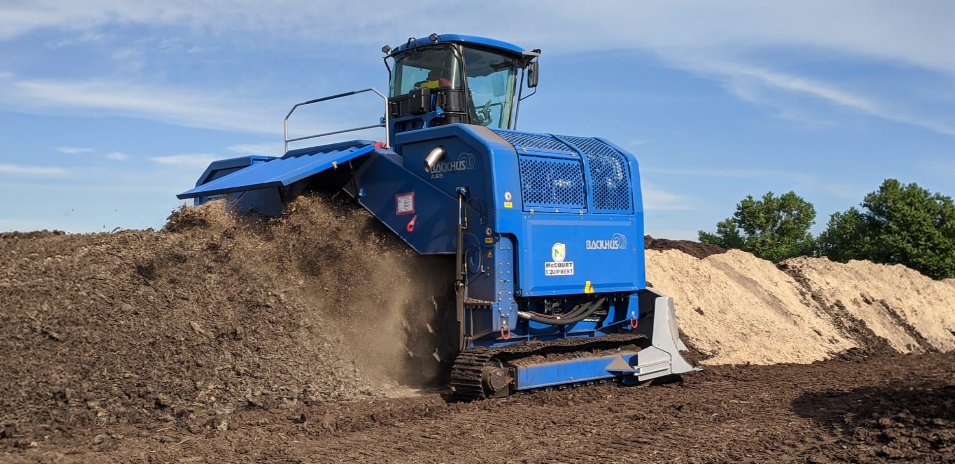
The Mechanics: Whether self-propelled or towed behind a tractor, these units straddle the windrow and use a massive, high-speed rotating drum equipped with heavy-duty flails or paddles. As the machine moves forward, the drum lifts the material from the inside out, vigorously aerating it, breaking up clumps, and reforming a perfectly shaped, oxygen-rich windrow in its wake.
The Operator Advantage: Maximum site efficiency and faster material turnover. Proper turning dramatically cuts down on the time it takes to produce a finished product, allowing you to move inventory off your site faster. Furthermore, because these machines can handle taller and wider piles than a standard loader, you can stack your windrows tighter, recovering massive amounts of usable yard space.
Our Lineup: We carry a robust inventory of ten different turners across two industry-leading manufacturers to match any scale of operation. For heavy-duty, self-propelled performance, our BACKHUS line offers unmatched fuel efficiency, premium cab comfort, and high-capacity throughput for massive commercial sites. If you need a reliable, cost-effective, tow-behind solution that integrates seamlessly with your existing tractors, our Menart series delivers proven versatility for agricultural and medium-to-large composting facilities.
Explore our full lineup of Compost Turners to find the right heavy-duty solution for your yard.
Depackaging Systems
The Job: When processing commercial food waste or bulk packaged organics, you need to quickly separate the valuable organic material from its packaging. Depackaging systems separate organic waste from inorganic packaging, converting food waste into cashflow. This allows you to divert massive volumes from landfills, maintain compliance, and create high-quality organics for composting, animal feed, or anaerobic digestion.
The Mechanics: In a single pass, these systems feed, separate, process, and extract organics into either a wet or dry output. Material is fed into a high-speed vertical mill, where bolt-on paddles utilize centrifugal force to extract the organics. To keep material moving without clogging, an auxiliary feed auger reverses at programmable timed intervals to completely eliminate product bridging in the hopper.
The Operator Advantage: You get massive material versatility on a small, stationary footprint. Operators can instantly change between a wet or dry organic discharge with a simple flip of a switch. The system cleans the separated inorganic fractions (like plastic, cardboard, and metal) for recycling, generating additional value, while the stainless-steel construction ensures low maintenance and a rust-free lifespan.
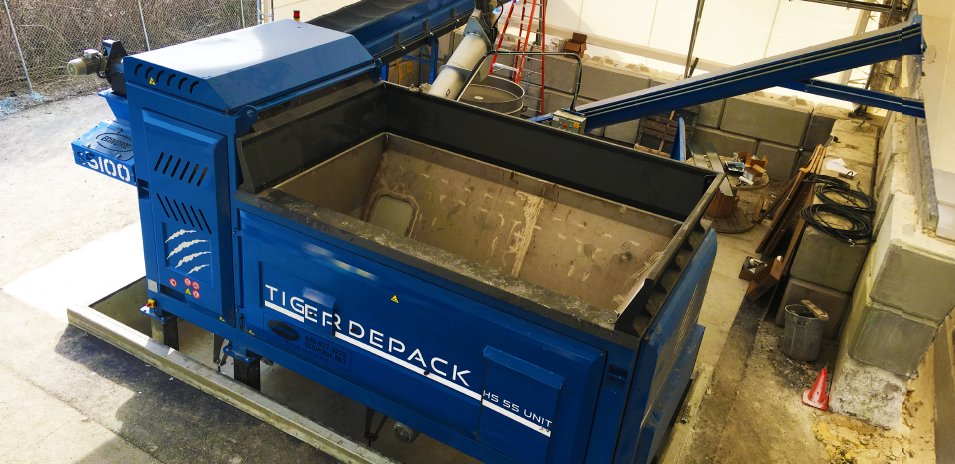
Our Lineup: We carry the complete line of Tiger Depack systems to match your throughput requirements. The highly compact HS-30 Depackager easily processes up to 10 tons per hour. For heavier commercial demands, the HS-55 and massive HS-90 scale production up to 20 and 40 tons per hour respectively, all while operating from a single stationary footprint.
Explore our full lineup of Depackaging Systems to turn your food waste into a profitable resource.
Key Purchasing Considerations
Adding heavy-duty environmental and recycling equipment to your fleet is a massive investment. Before you make a decision, you need to evaluate three critical factors to ensure you spec the right machine for your exact job site:
- Volume and Throughput: Don't just look at your average daily tonnage; look at your peak seasons. How many tons per hour do you need to process to prevent material bottlenecks? Under-sizing your machine will choke your workflow, while over-sizing it will waste capital and fuel.
- Site Footprint and Mobility: Do you have a dedicated, stationary processing facility, or do you need to chase the pile across a massive outdoor yard? If you are moving frequently or dealing with rough terrain, you need to prioritize tracked machines over stationary or wheeled units.
- Power Requirements: Consider your site's infrastructure. If you are operating a permanent indoor facility, opting for electric-drive machinery can heavily cut down on diesel costs and emissions. However, if you are out in the yard or moving site-to-site, you need robust diesel-powered units that can operate entirely off the grid.
Ready to Reclaim Your Yard?
Choosing the right processing equipment depends heavily on your unique material mix, daily throughput, and site layout. Don't leave it to guesswork.
Our equipment specialists are ready to help you evaluate your waste streams and spec the exact machinery you need to maximize your operational uptime and profitability.
Contact Williams Machinery to schedule a site assessment and get a quote on our premium line of environmental and recycling solutions.